Events
EEC NATIONAL CONFERENCE 2026, 27-28 MAY | SYDNEY

The EEC National Conference, supported by Major Partner the NSW Government and Event Partner the Victorian Government, delivered a clear, practical narrative: electrification, efficiency and demand-side optimisation must move together if Australia is to hit ambitious 2035 targets. Across keynotes, panels and workshops the conversation shifted from “what if” to “how” — with policy design, data, and consumer-centred delivery emerging as the levers that will determine success. Panels made a pragmatic case: hitting 70% by 2035 is not a single-technology race. It requires coordinated policy, transparent cost metrics, and consumer-centred delivery. As one session put it, the future must be “a designed future, not one we sleepwalk into” and “We need to be doubling down on electrification and renewables”.
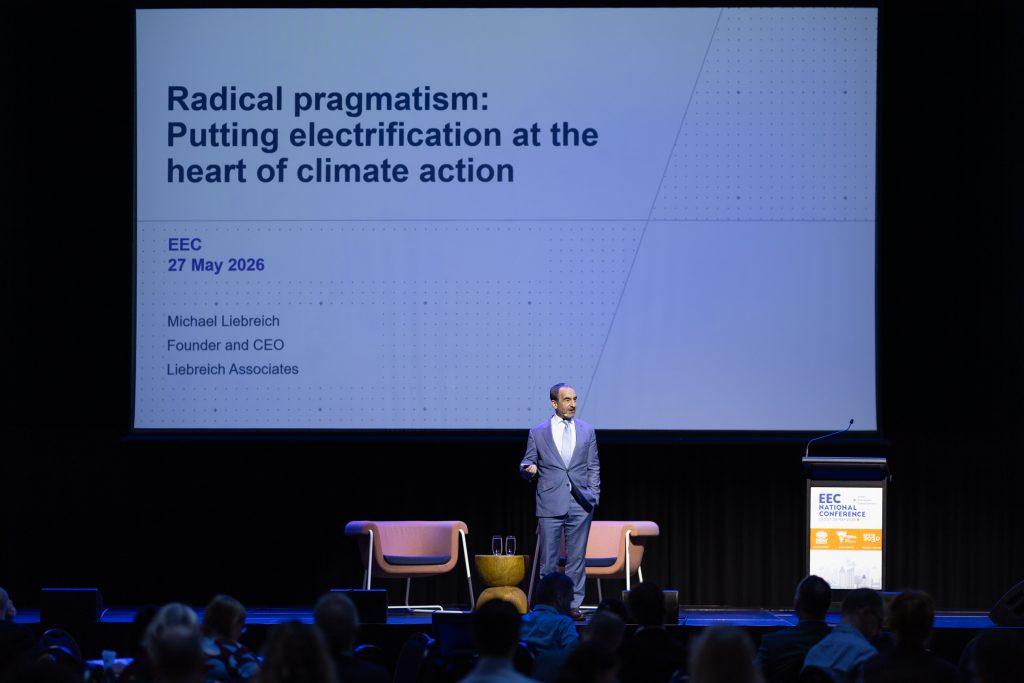
International keynote: Michael Liebreich — Radical pragmatism
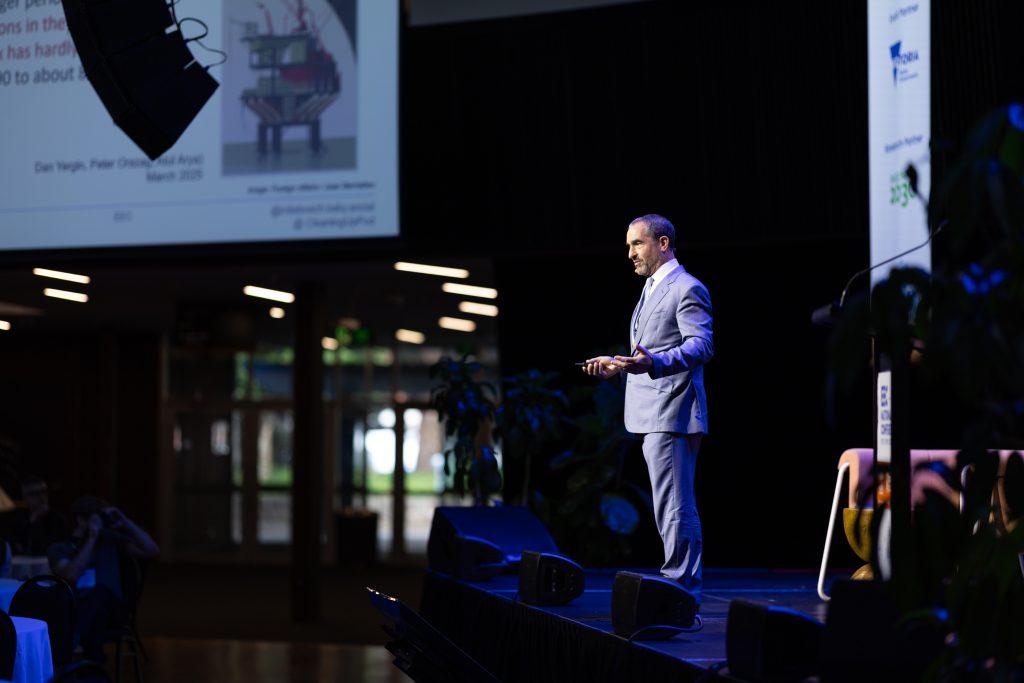
Michael argued once electricity is sufficiently clean, accelerating electrification delivers faster decarbonisation than focusing solely on supply‑side decarbonisation.
He urged building the “electrotech stack” – EVs, heat pumps, household and vehicle batteries – while managing peak impacts, lowering electricity prices to enable uptake, and avoiding the “primary energy fallacy” by recognising that efficient electric technologies require less primary energy to deliver useful services.
Liebreich’s sharper lines – “China is playing chess while everyone else is playing draughts” and the reminder to “drive demand through electrification, and you need to do it smart so it doesn’t drive up the peak” – underlined the urgency and strategic focus he called for as the conference’s energising opening.
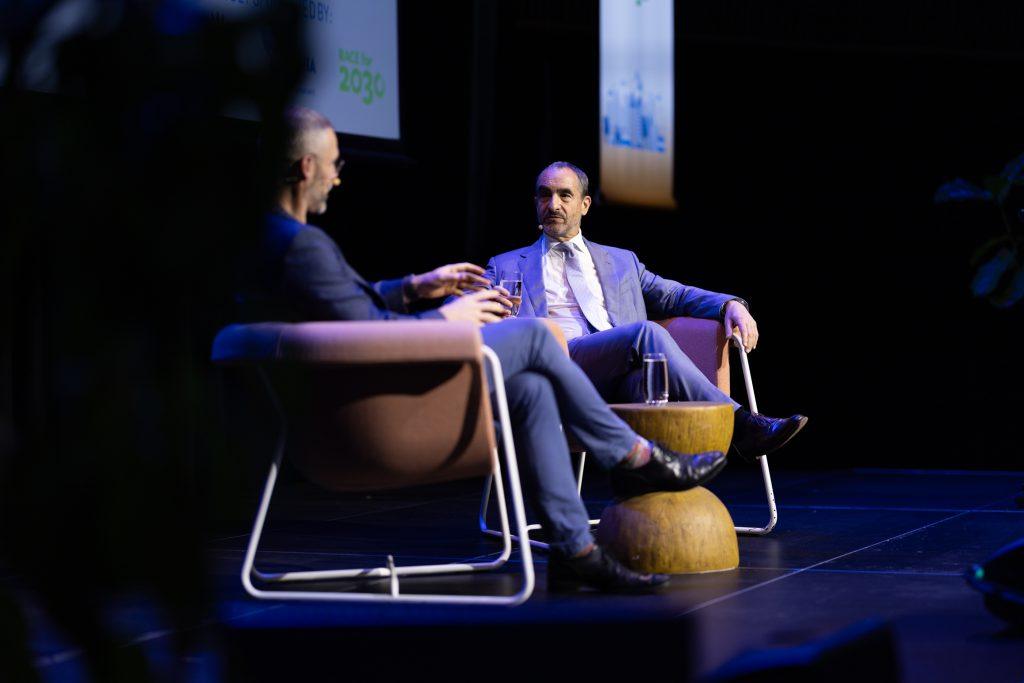
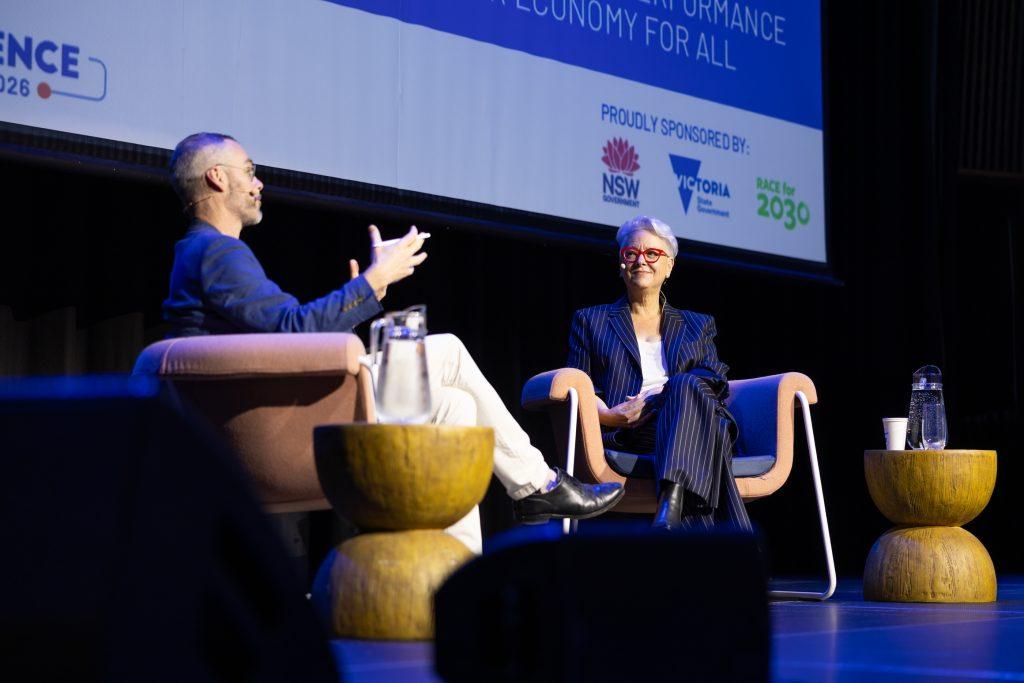
‘Electrify almost everything’: Michael Liebreich in conversation with Luke Menzel
A practical follow-up to the keynote, the conversation centred on the importance of sequencing (efficiency first, where sensible), lowering electricity prices to enable electrification, and designing policy that spreads fixed network costs across more productive demand.
Michael Liebreich, Founder of Bloomberg NEF
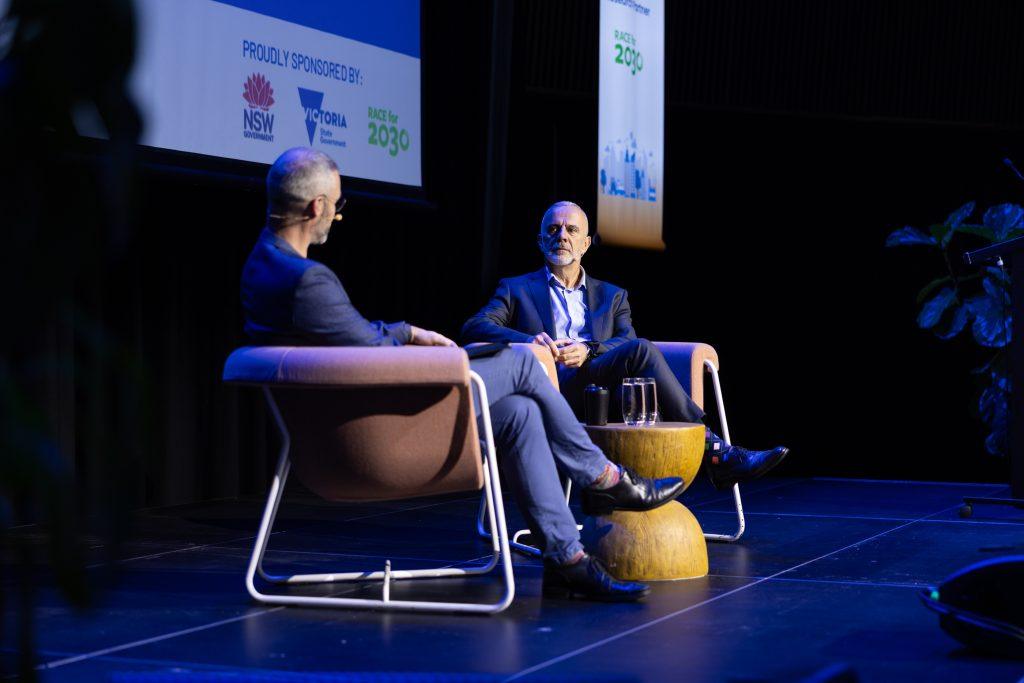
In conversation: Anthony Lean with Luke Menzel
Anthony Lean sat down with Luke Menzel to discuss the development of the NSW Net Zero Plan and the role of electrification, energy efficiency and energy system optimisation in the pathway to 2035 emissions reduction targets. Secretary Lean outlined NSW’s Net Zero planning approach: sector plans, electrification, efficiency and system optimisation, are being brought together to meet the 2035 target. He emphasised the need for federal–state coordination on incentives and for demand-side measures to be treated as system resources.
Anthony Lean, Secretary of the NSW Department of Climate Change, Energy, the Environment and Water


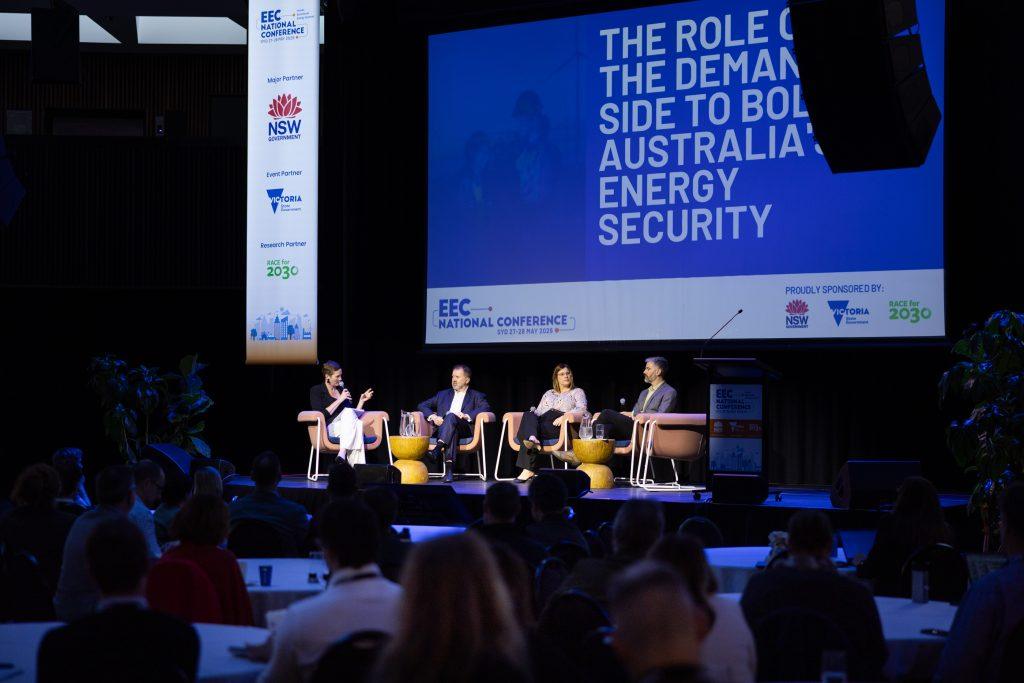
The role of the demand side to bolster Australia’s energy security
The session framed demand-side action as central to energy security and equity: flexibility, targeted retrofits and renter-inclusive programs were highlighted as critical to avoiding an emerging energy divide.
A notable quote came from Brendan, who told the audience that “the future needs to be a designed future, not one we sleepwalk into.”
Francis Vierboom, Rewiring Australia
Dr Alina Dini, Electric Vehicle Council
Brendan French, Energy Consumers Australia
Anna Freeman, EEC
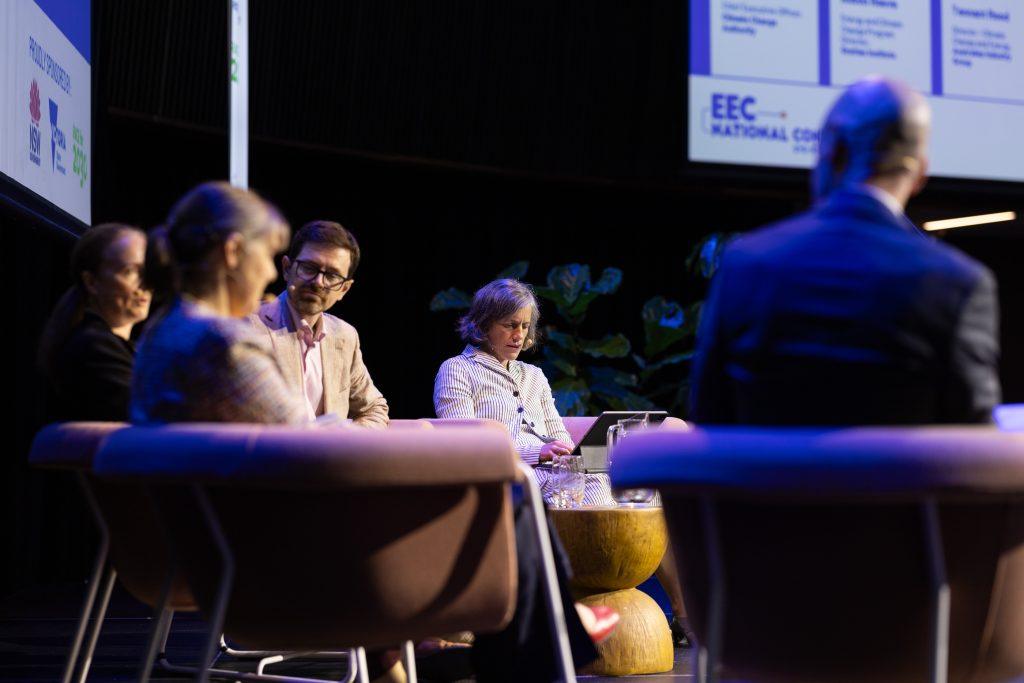
To 70% and beyond: Pathways to Australia’s 2035 target
Panellists agreed that achieving Australia’s 70% by 2035 target will require all levers: renewables, electrification, efficiency, and demand-side optimisation. The conversation balanced realism (many things must go right) with urgency, noting sector plans and pragmatic policy signals are needed now.
Kath Rowley, Climate Change Authority
Alison Reeve, Grattan Institute
Tennant Reed, Ai Group
Kim Curtain, NSW Government
Rob McLeod, EEC
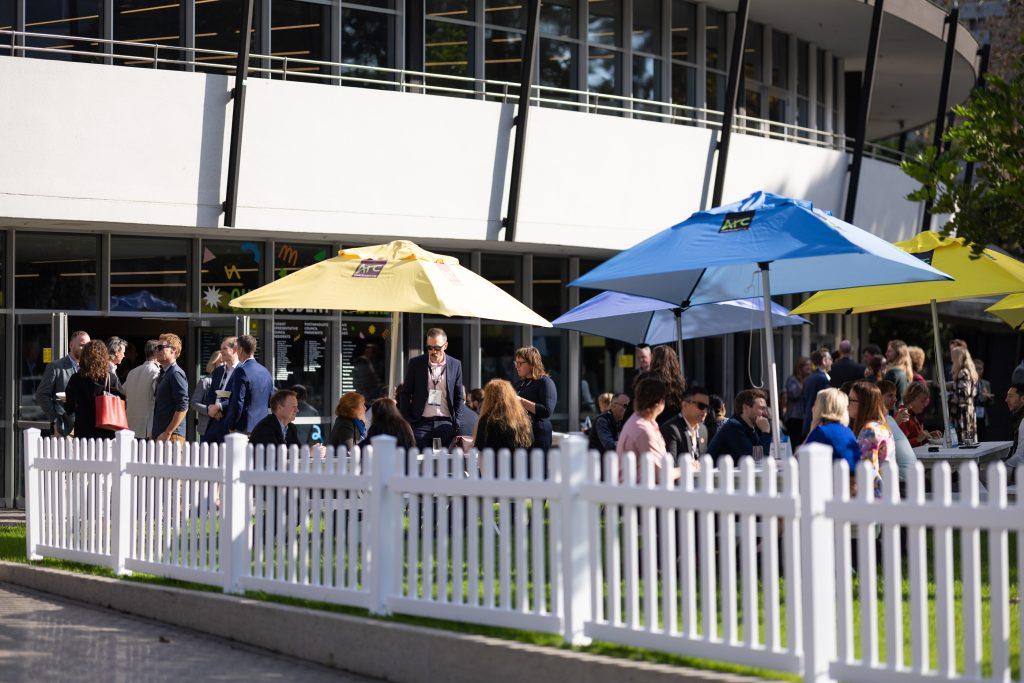
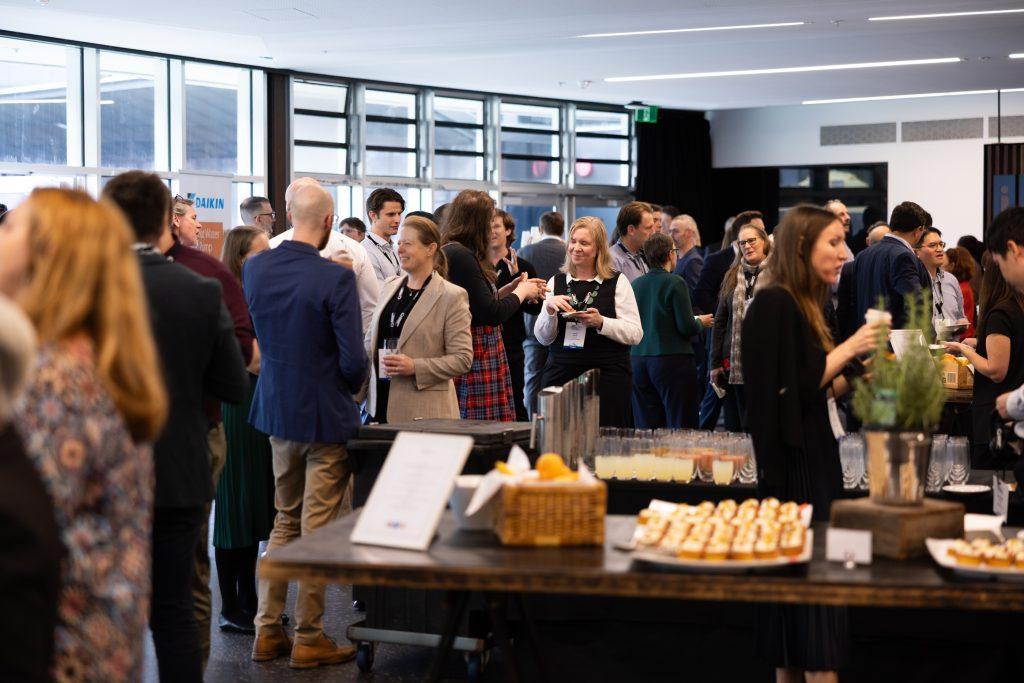
Networking Lunch: Schneider Electric
Up for grabs: Reimagining Australia’s energy systems for 2035
AEMO and industry speakers painted a picture of a high-renewables, high-storage future, emphasising that demand-side resources must be modelled alongside supply. Key risks identified included governance fragmentation, visibility gaps, and distribution tariff design that currently disincentivises flexibility.
Violette Mouchaileh, AEMO
Louisa Kinnear, Australian Energy Council
Rob Murray-Leach, Emel Consulting
Jeremy Sung, EEC

Powering the Future: Virtual Power Plants in Australia’s energy transition
Panellists discussed consumer trust, product design and the role of tradespeople at the point of sale. We heard that uptake is strongest where customers retain control; harmonised incentives and a trusted national comparator would help accelerate VPP participation.
Merrily Hunter, MAC Trade Services
Clare Rainbow, Amber Electric
Chris Abrams, Energy
Luke Menzel, EEC
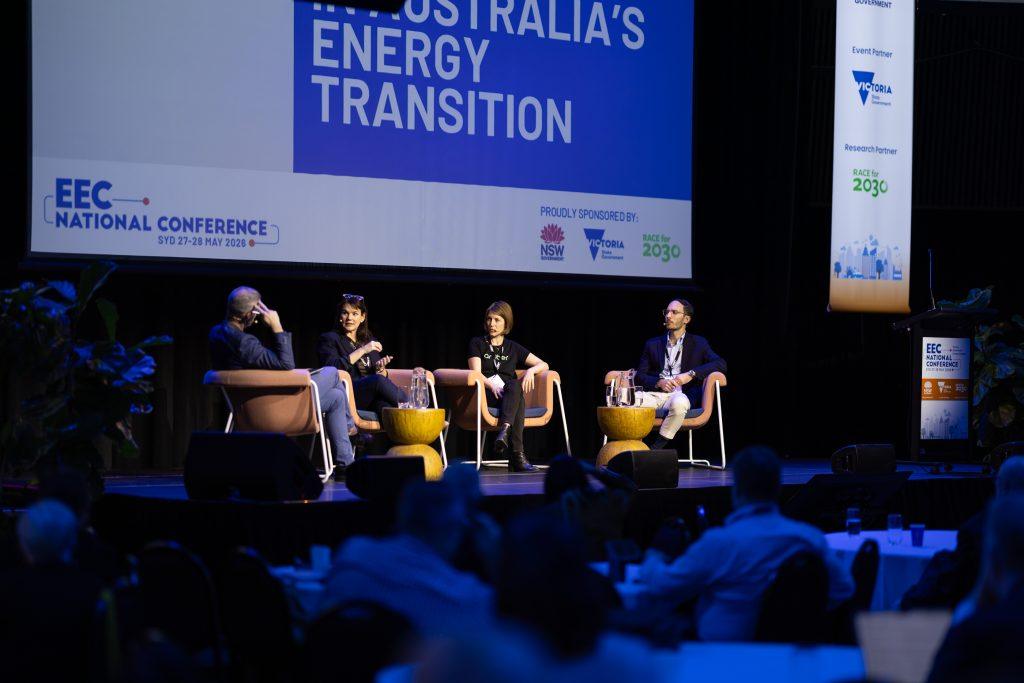
Pitch session: Setting up certificates for 2035
The audience was treated to a lively set of five-minute pitches:
- Merrily Hunter (MAC Trade Services): EVs as mobile batteries generating STCs.
- Emily Skehill (AGL): Certificate multipliers for bundled whole-of-home upgrades.
- Justin Whelan (Energy Consumers Australia): making the SRES work for renters, including plug-in solar and batteries.
- Tristan Edis (Green Energy Markets): market-based mechanisms are great, actually (along with the provocative line: “if you don’t vote for me, you are voting for Tony Abbott”).
- Kellie Caught (ACOSS): the benefits of certificate schemes should go to the people who need it the most – introducing sub-targets for households facing barriers.
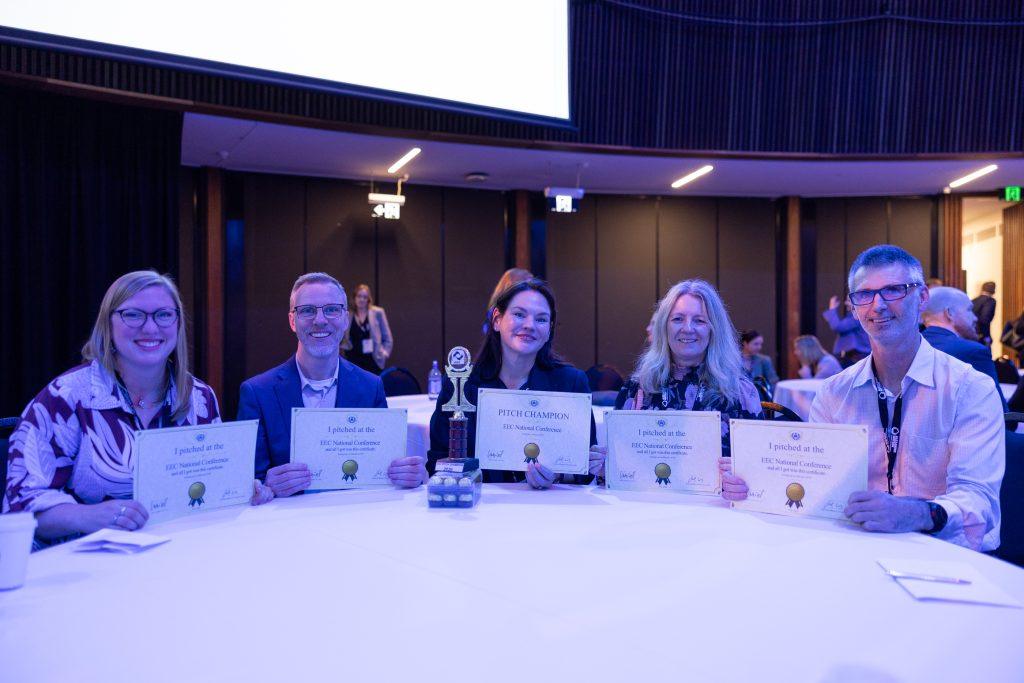
Pitchers fielded thoughtful questions from expert panellists, with a clear common thread emerging across pitches: the need for enhanced equity and simplicity in scheme design. The audience voted to crown the Pitch Champion: Merrily Hunter with her pitch for EVs as mobile batteries generating STCs.
Panellists:
Kirralee Tyndall, Solar Victoria
Terry Neimeier, DCCEEW, NSW Government
Rachael Wilkinson, EEC
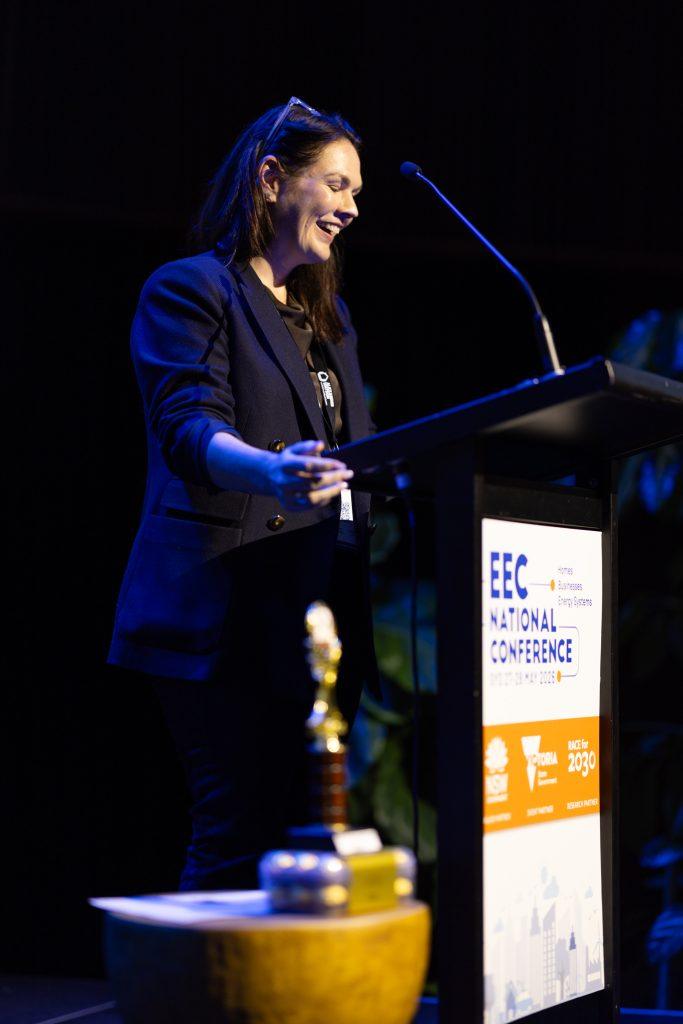

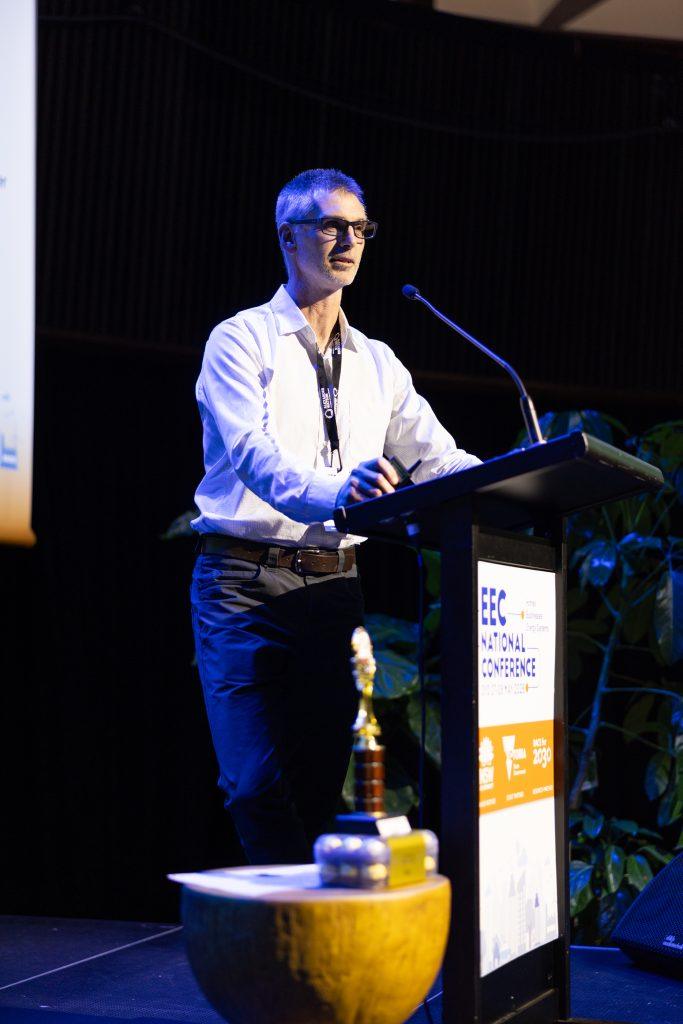
Gala Dinner featuring the EEC Awards 2026
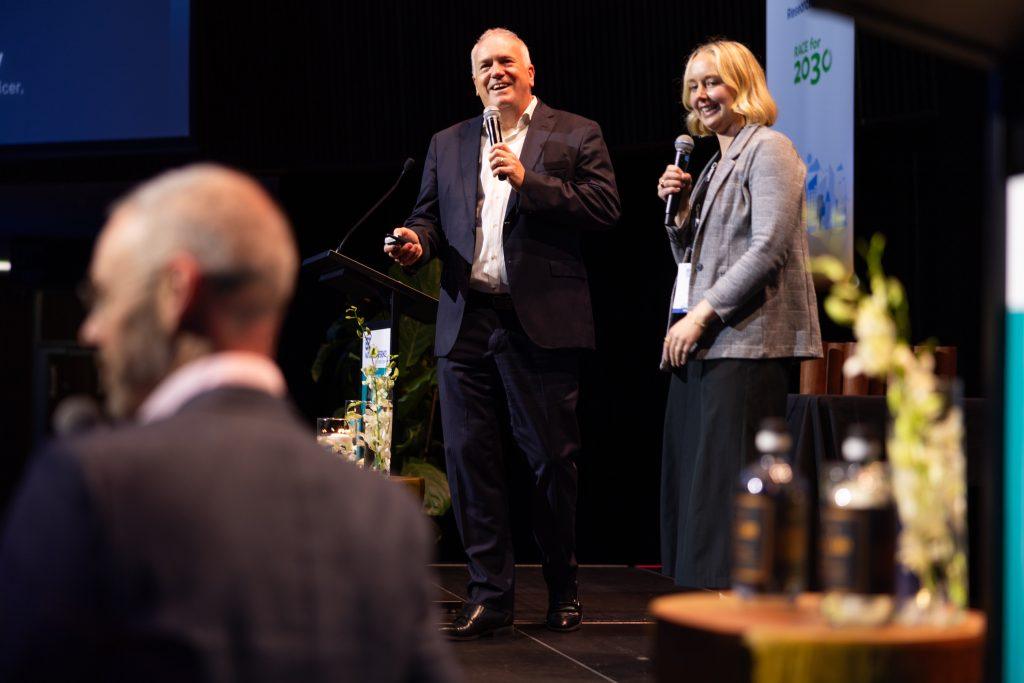
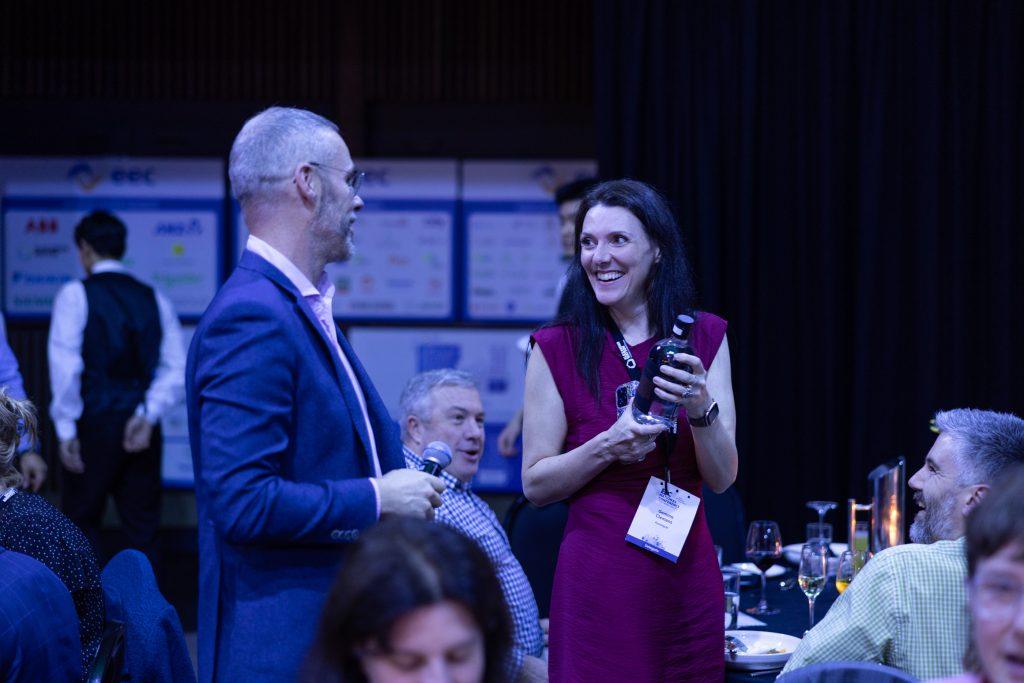
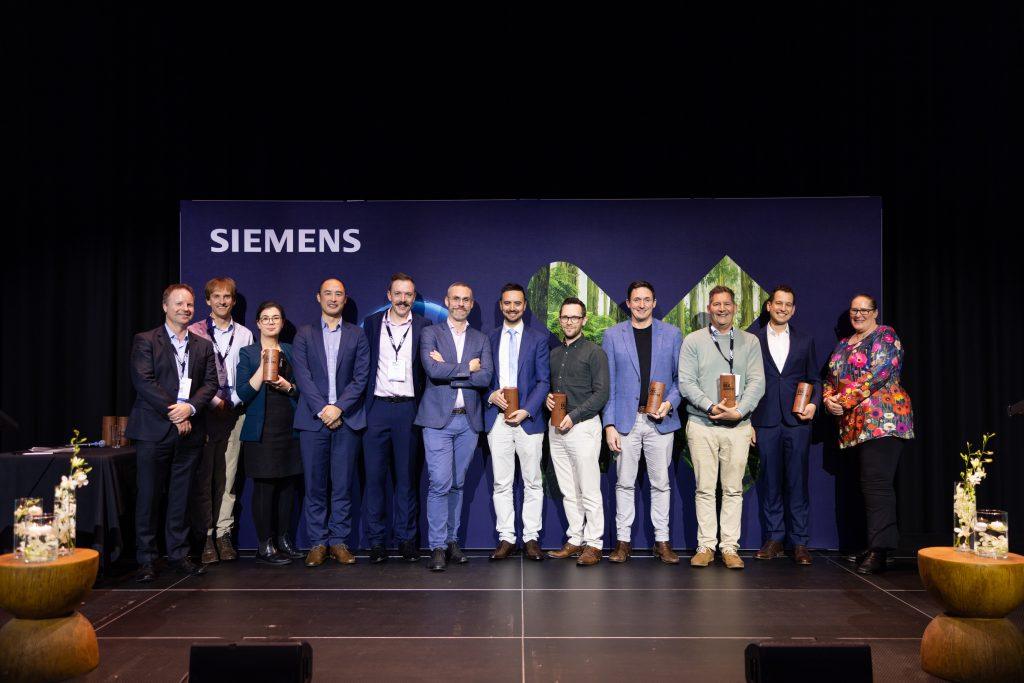
The Gala Dinner, hosted by Luke Menzel and Frankie Muskovic and sponsored by Siemens, opened with a light‑hearted partner presentation from Peter Halliday including a quiz and a much sought after gin giveaway, then moved into the 2026 EEC Awards where winners across government programs, homes, businesses and optimised energy systems were celebrated.
Read more about the 2026 EEC Award Winners HERE.

Ministerial Armchair: Penny Sharpe in conversation
The Minister urged a simultaneous, system‑wide push on electrification, efficiency, and targeted delivery—from social housing upgrades and the near‑ready Home Energy Saver Program, to sector plans for transport and the built environment. She stressed that “the challenge really is there’s so many pieces to it… we’re forced, whether we like it or not, to deal with all of it at the same time.” In response, Luke called for a “galaxy frame” approach that doubles down on electrification and renewables while managing costs across the whole system.
The Hon. Penny Sharpe MLC, Minister for Climate Change, Minister for Energy and Minister for the Environment, NSW Government
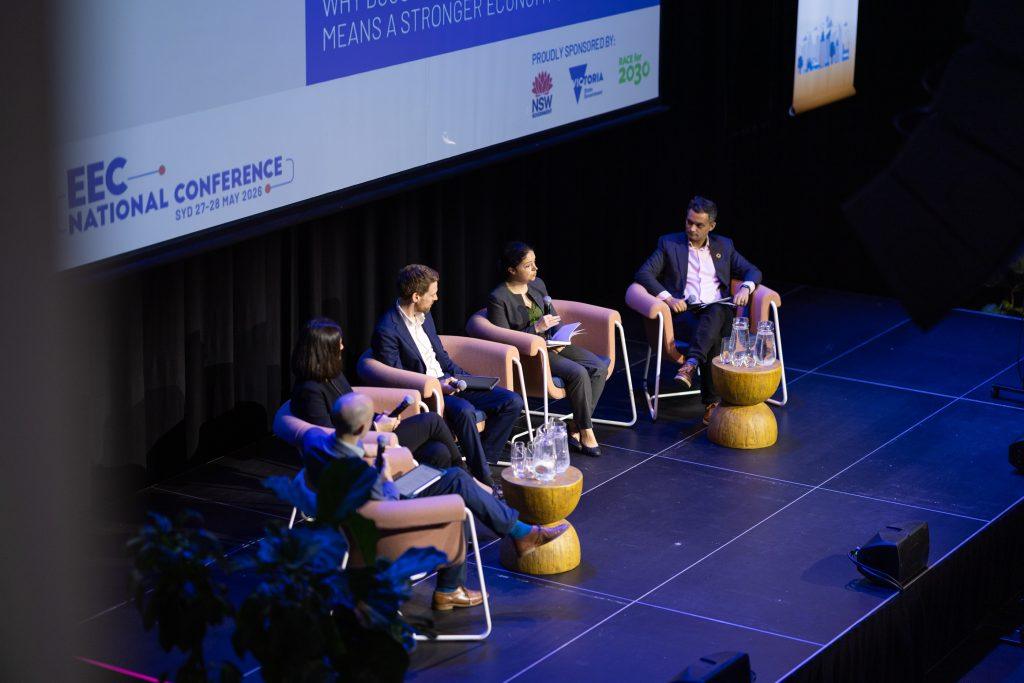
Energy productivity = economic productivity: Why boosting our energy performance means a stronger economy for all
Key message: Having an ‘abundance mindset’ and strengthening energy performance go hand in hand. Speakers linked energy efficiency to a range of economic outcomes: from reducing business opex, releasing capital for other investments, to raising Australia’s competitiveness through commercial buildings that attract global companies to our major cities. For households, efficiency means bill savings that free up cash for other expenditure and improved comfort and health (meaning healthier, more productive workers). But reaping the benefits requires a policy investment including harmonised standards, mandatory disclosure, targeted support for lower‑income households, and boosting energy R&D expenditure.
Ben Brazier, Commonwealth Bank
Alex Heath, NSW Treasury
Amandine Denis-Ryan, IEEFA
Davina Rooney, GBCA
Shreejan Pandey, Monash Energy Institute
Jeremy Sung, EEC
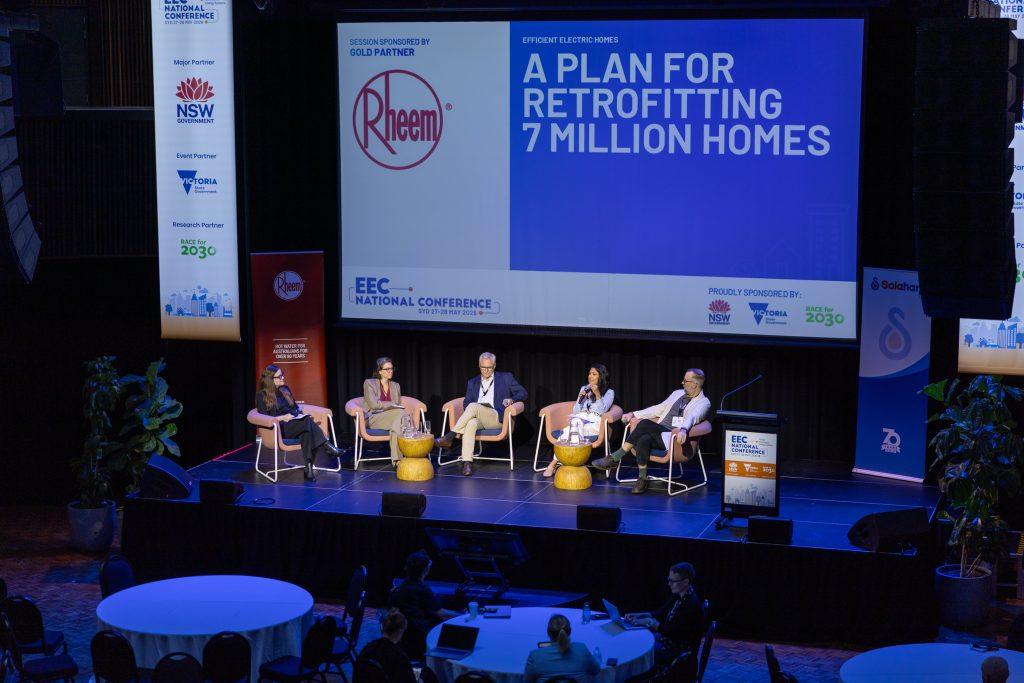
STREAM: Efficient Electric Homes
A plan for retrofitting 7 million homes
Panelists described retrofit scale-up as an infrastructure challenge requiring workforce development, coordinated financing and clear sequencing. Social housing programs (e.g., SHEPI) and ‘one-stop’ consumer platforms (e.g., SEC Easy Electric) were showcased as practical delivery models.
Scott Ostini, Rheem Australia
Aaron Hemsley, VIC Government
Gill Goldsmith, Government
Sumone Chakravarti, SEC Victoria
Rachael Wilkinson, EEC
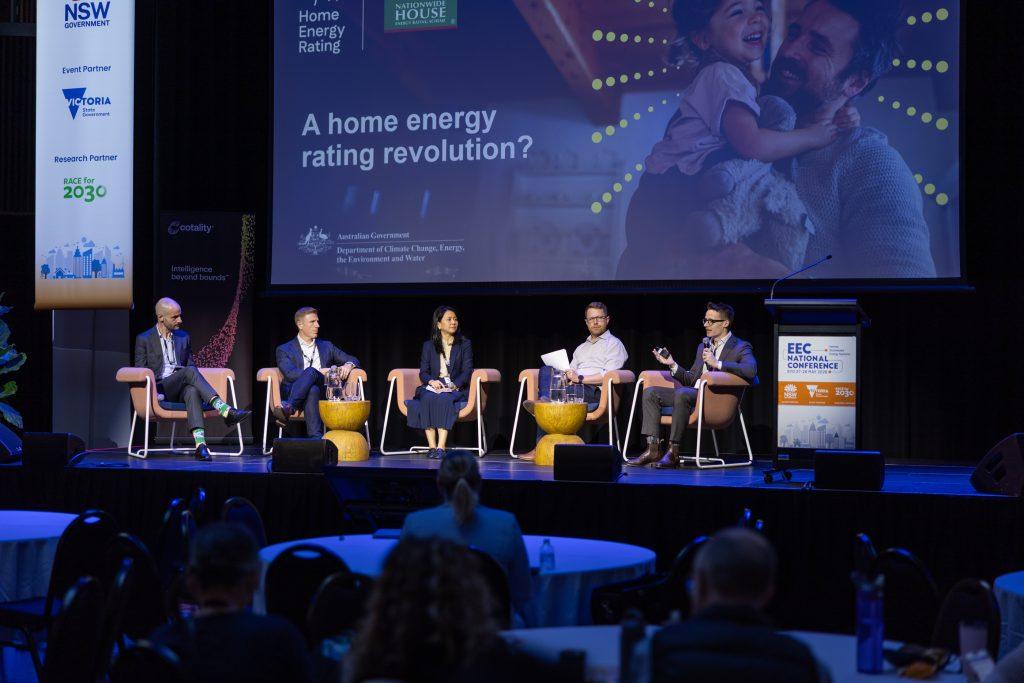
Locked, loaded and ready to disclose: NatHERS for existing homes are coming
This session gave the audience a sneak peak at the brand new Home Energy Rating that is set to underpin disclosure, and focused on the mechanics of mandatory disclosure, driving market scale, and reducing per-assessment costs. TL; DR: more mandatory disclosure now!
Richard Griffiths, Cotality
Isaac Gravolin, NatHERS, Australian Government
Emily Yip, NSW Government
Jacob Caine, Real Estate Institute of Australia
Rob McLeod, EEC
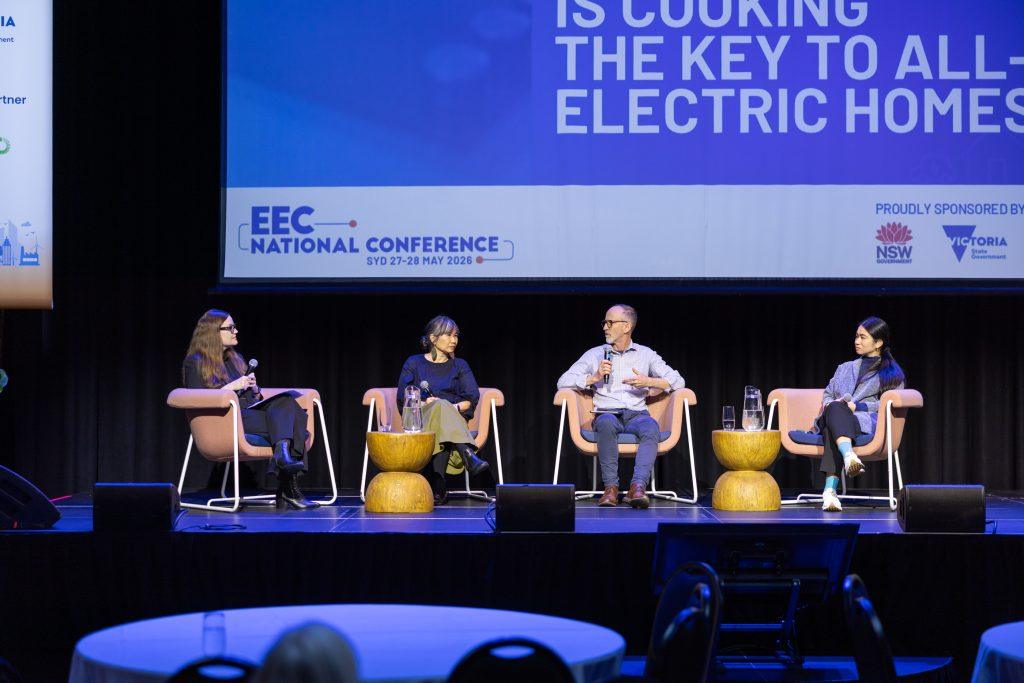
Now we’re cooking with electrons: cooking and all‑electric homes
We zoomed in on one of the most familiar household appliances – the cooktop. Speakers explored the health, technical, and practical dimensions, noting that induction cooking can significantly improve indoor air quality and performance. However, barriers remain, including limited electrical capacity in apartments, retrofit costs, and strong cultural preferences for gas cooking.
Dr Kim Loo, Doctors for the Environment Australia
Scott Barnes, RACE for 2030
Andrea Au, Global Cooksafe Coalition
Rachael Wilkinson, EEC
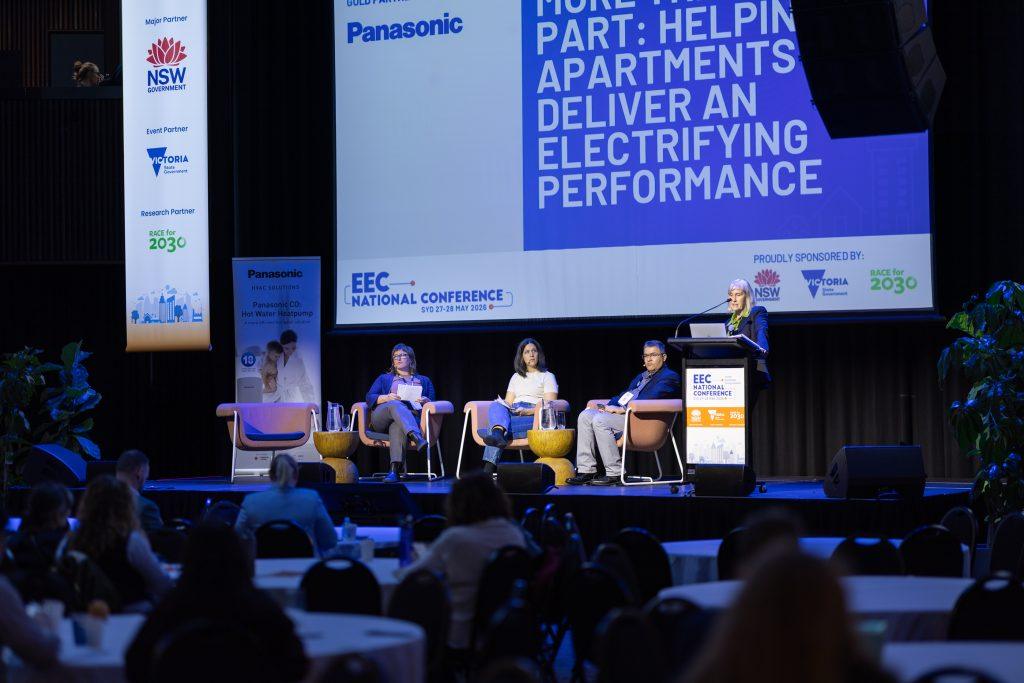
More than a bit part: Helping apartments deliver an electrifying performance
The panel was clear that apartment electrification is no longer a niche issue – it’s central to an equitable energy transition. Speakers emphasised that systemic barriers like governance, infrastructure constraints, and misaligned policy settings must be addressed to avoid leaving renters and apartment dwellers behind.
Preshit Fadnis, Panasonic
Dr Rachel Goldust, VIC Government
Maria Panagiotidou, City of Melbourne
Jenniy Gregory, RACE for 2030
STREAM: Productive Net-zero Businesses
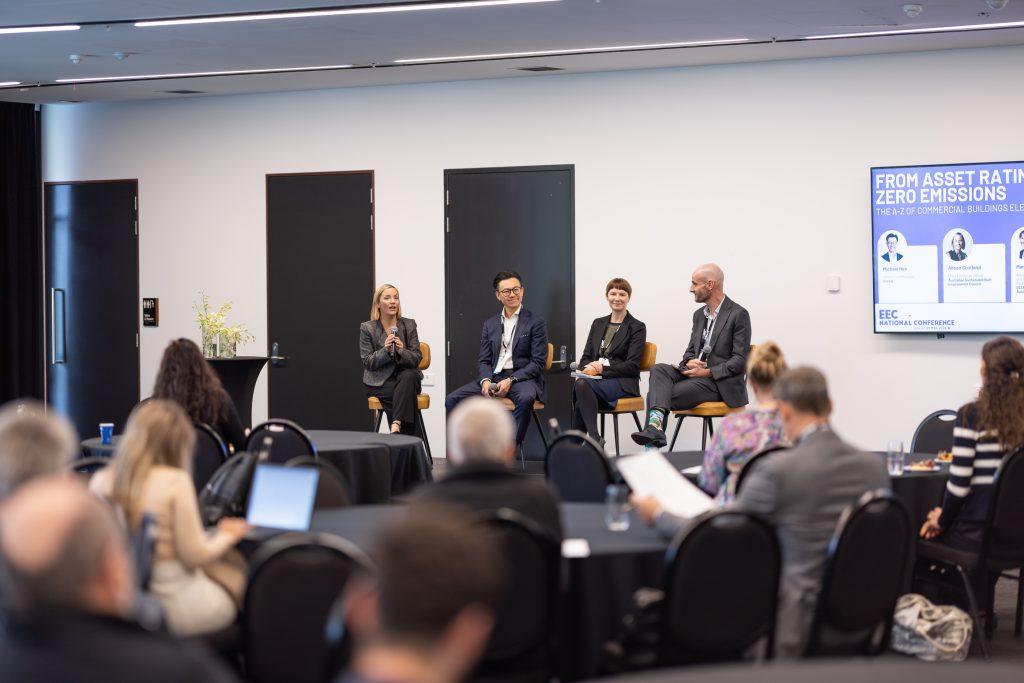
From Asset Ratings to Zero Emissions: Commercial buildings electrification
This session had panelists explaining that commercial electrification is uneven: premium assets lead while fragmented ownership, split incentives and retrofit complexity slows broader uptake. Transparency tools (like NABERS and disclosure) as well as policy signaling were identified as the most effective levers to scale action.
Michael Hua, Corval
Alison Scotland, ASBEC
Mara Putnis, Australian Government
Rob McLeod, EEC
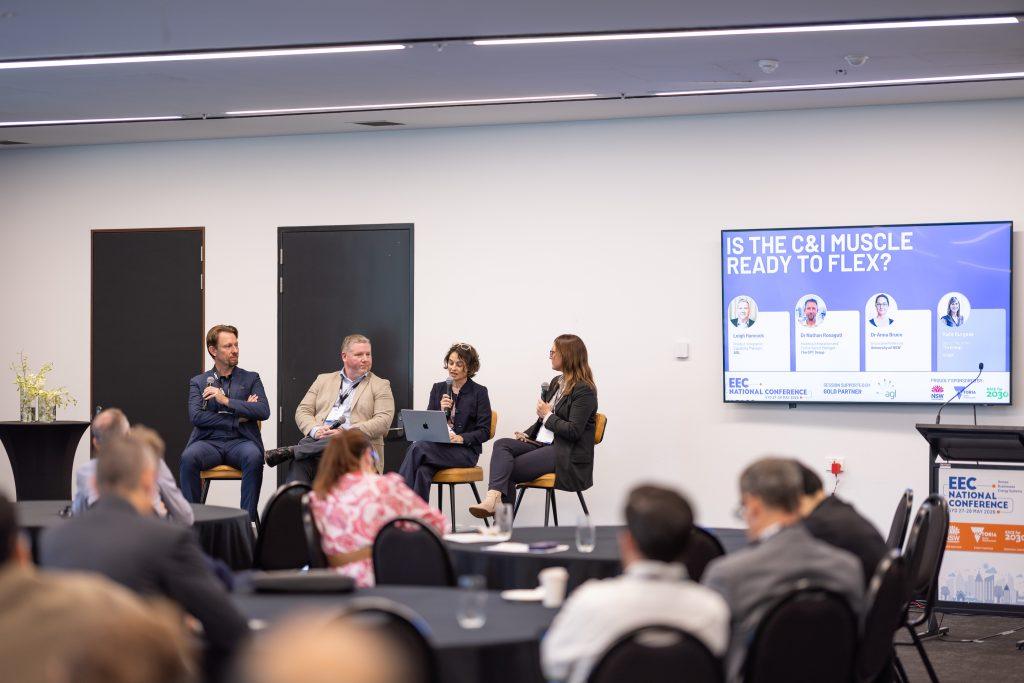
Is the C&I muscle ready to flex?
Panelists discussed ARENA trials and industry pilots showing that meaningful C&I flexibility is achievable – but noted timing matters more than volume. Barriers identified included tariff misalignment, data friction, and the need for less prescriptive market mechanisms that keep customers in control.
Leigh Hancock, AGL
Dr Nathan Rosaguti, The GPT Group
Dr Anna Bruce, University of NSW
Kate Burgess, The Energy
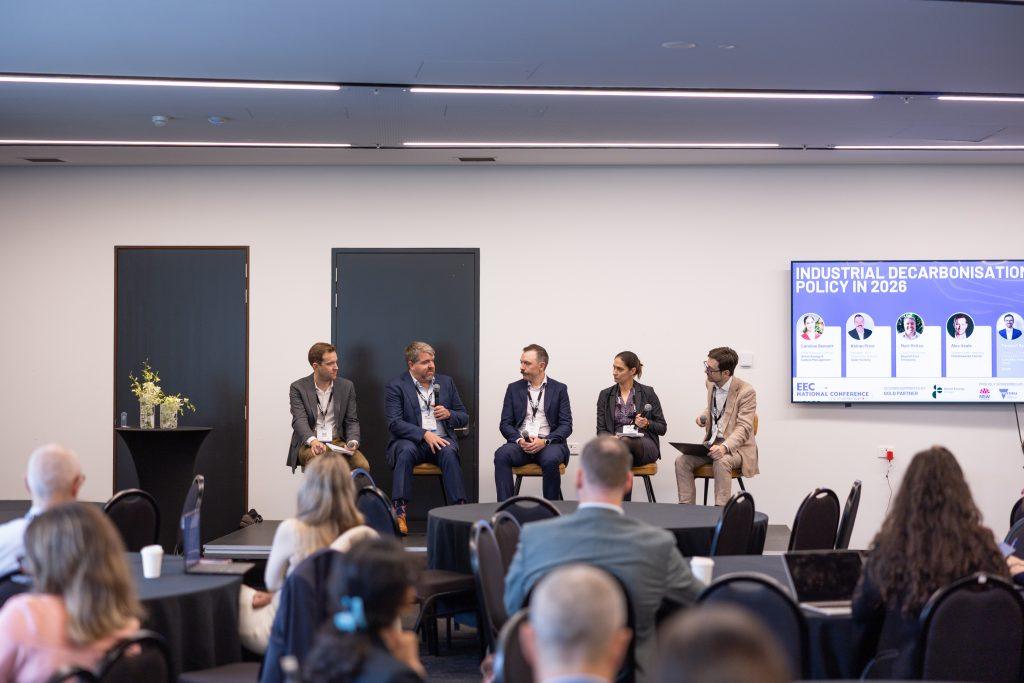
Industrial decarbonisation policy in 2026
Panelists agreed that policy is shifting from targets to implementation, but current settings still underutilise demand-side measures. Key priorities included differentiated pathways by industry, scaled financing, and market signals that reward fuel switching and thermal storage.
Caroline Bennett, Green Energy & Carbon Management
Keiran Price, Solar Victoria
Matt McKee, Beyond Zero Emissions
Alex Veale, Climateworks Centre
Tennant Reed, Ai Group
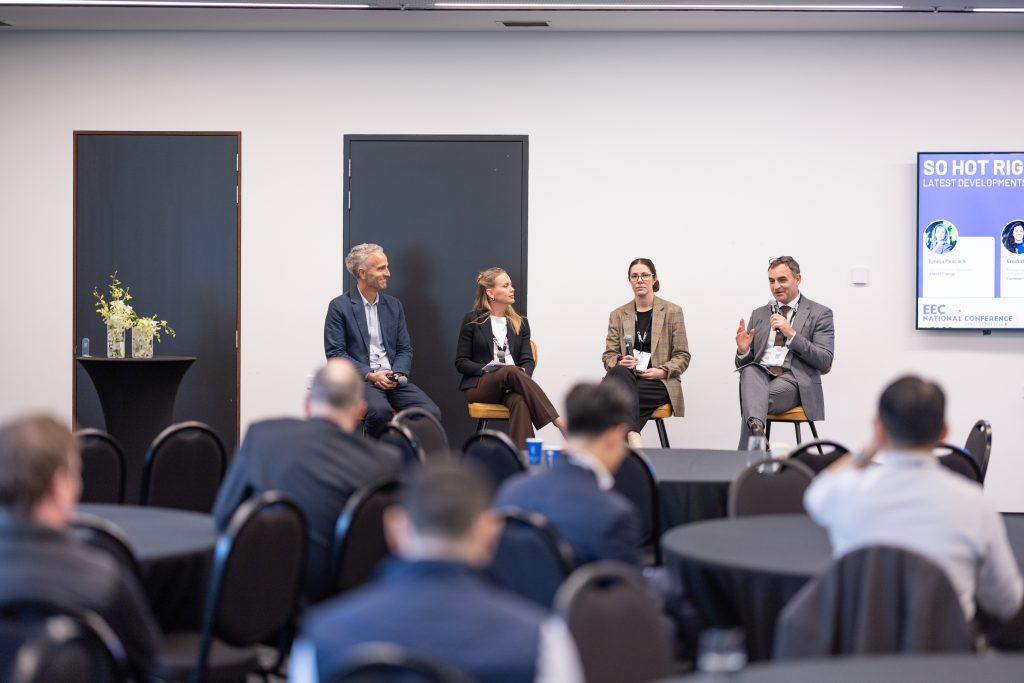
So Hot Right Now: Industrial heat technologies
Panelists showcased a broad technology suite (high‑temperature heat pumps, thermal batteries, heat‑as‑a‑service) and stressed that service models and financing (not just technology) are the critical scaling enablers for heavy industrial heat decarbonisation.
Emma Peacock, Antora Energy
Emma Rubenach, Common Capital
Tosh Szatow, RACE for 2030
Jarrod Leak, A2EP
STREAM: Optimised Energy Systems
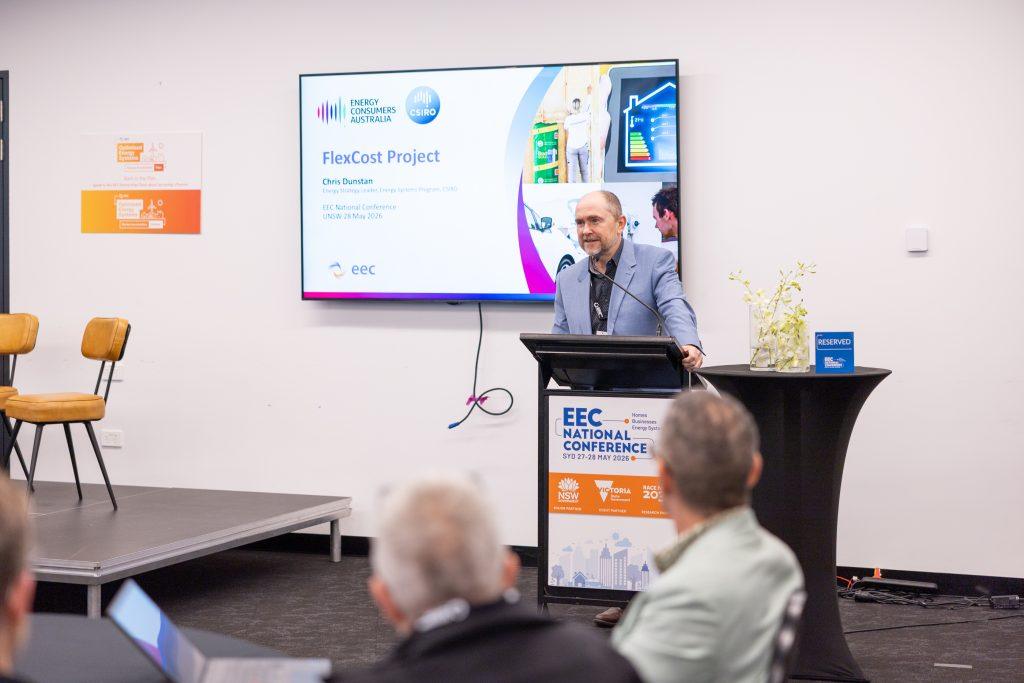
Demand-side Opportunities Workshop Part 1:
How can greater focus on demand-side opportunities in energy system planning support a lower cost pathway to net zero?
AEMO and DCCEEW framed the DSOO as a bottom-up, NEM-focused project to identify opportunities for efficiency, electrification and flexibility alongside generation and network expansion opportunities, and CSIRO introduced FlexCost, a related project to publish levelised demand-side costs, akin to the GenCost report on the supply side. An engaged audience weighed in on questions such as the DSOO’s audience and purpose, and how the FlexCost and DSOO could fit with AEMO’s existing forecasting products.
Jennie Cassidy, Australian Government
Dr Chris Dunstan, CSIRO
Ben Jones, AEMO
Jeremy Sung, EEC
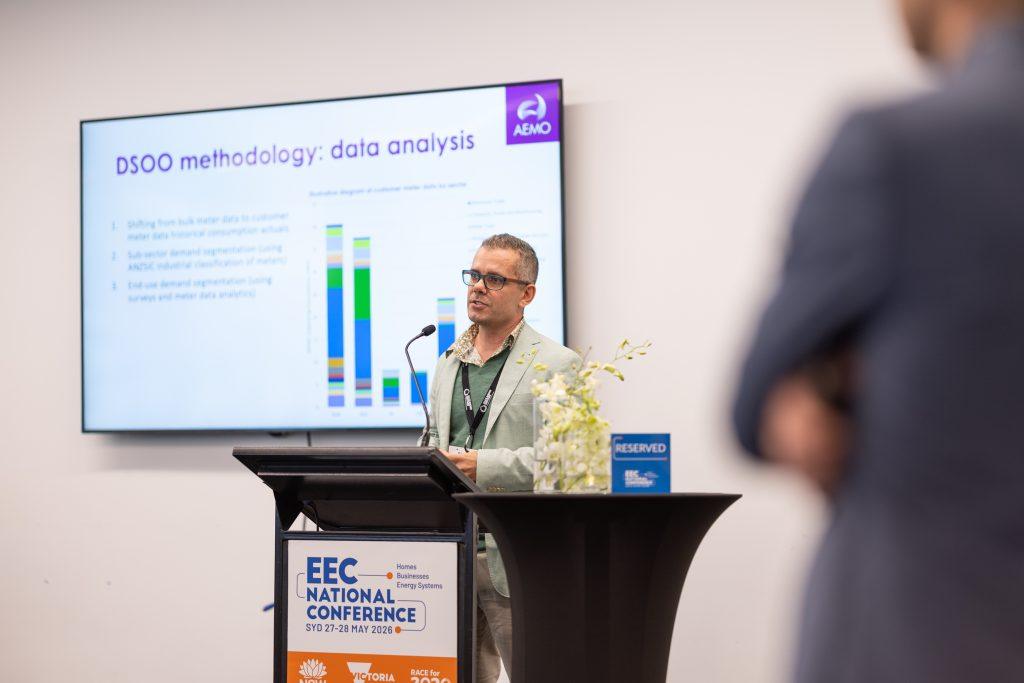
Demand-side Opportunities Workshop Part 2:
How should we measure the scale and potential benefits of demand-side opportunities?
The UK Department for Energy Security and Net Zero’s Andre Neto-Bradley showed how the UK’s new National Buildings Database has created a ‘digital twin’ of every building in the country, with a tremendous level of detail that could inform energy system planning. This was great inspiration for AEMO, who are currently working on their data collection and modelling approach for DSOO. Again the audience provided excellent feedback on priority technologies and potential data sources that will no doubt prove invaluable to the DSOO team and DCCEEW and AEMO.
Jennie Cassidy, Australian Government
Dr André Neto-Bradley, UK Government
John McKibbin, AEMO
Jeremy Sung, EEC
End Use, Grid Use and You: How customer‑focused distribution networks could unlock an affordable energy revolution
Panelists argued that distribution networks need to shift from being passive operators (simply managing poles and wires) to active platforms that integrate and orchestrate consumer energy resources. Key enablers included granular grid visibility, equitable data sharing, interoperable devices and standards, and tariff reform that rewards local flexibility.
Dr Subbu Sethuvenkatraman, CSIRO
Danielle Beinart, AEMC
Jessica Morris, SA Power Networks
Craig Memery, Justice and Equity Centre
Liz Fletcher, EEC

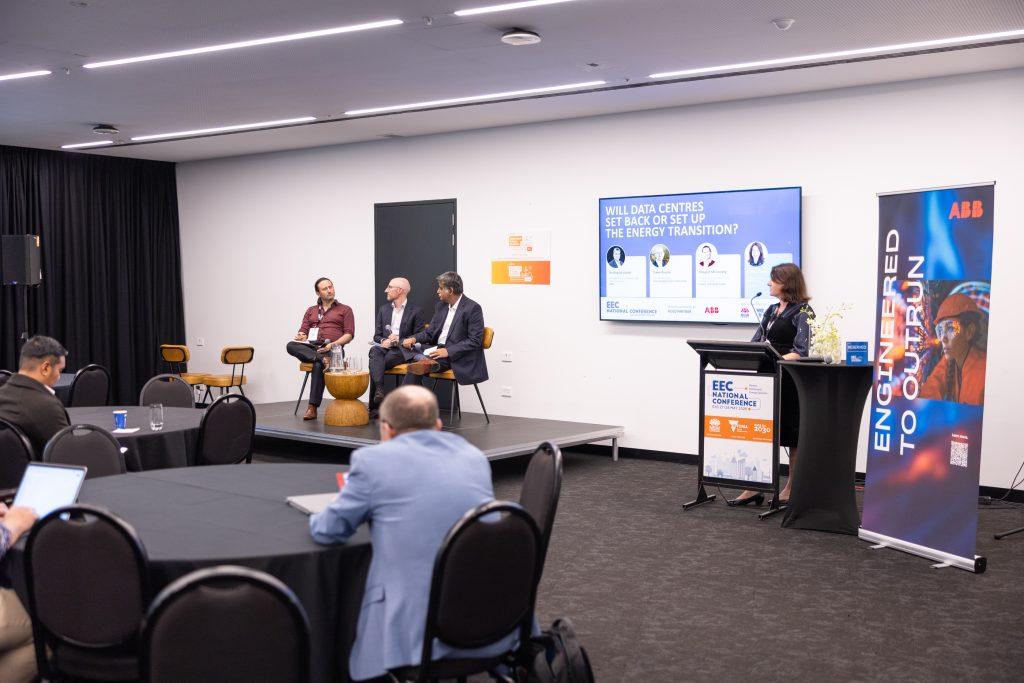
Will data centres ruin or reinforce the energy transition?
The panel framed data centres as a major and growing source of demand. They concluded that the risks data centres pose are manageable if early governance, spatial planning, flexibility requirements and fair cost allocation are put in place to avoid shifting system costs onto other consumers. Not only that, technology is available now that could have a material impact on data centres’ energy use, including AI-optimised cooling as presented by Ankush.
Dr Ankush Gulati, ABB
Owen Pascoe, CEFC
Doug McCloskey, Justice & Equity Centre
Charis Palmer, The Energy
What’s the story morning glory? Communicating the value of an efficient, electric economy
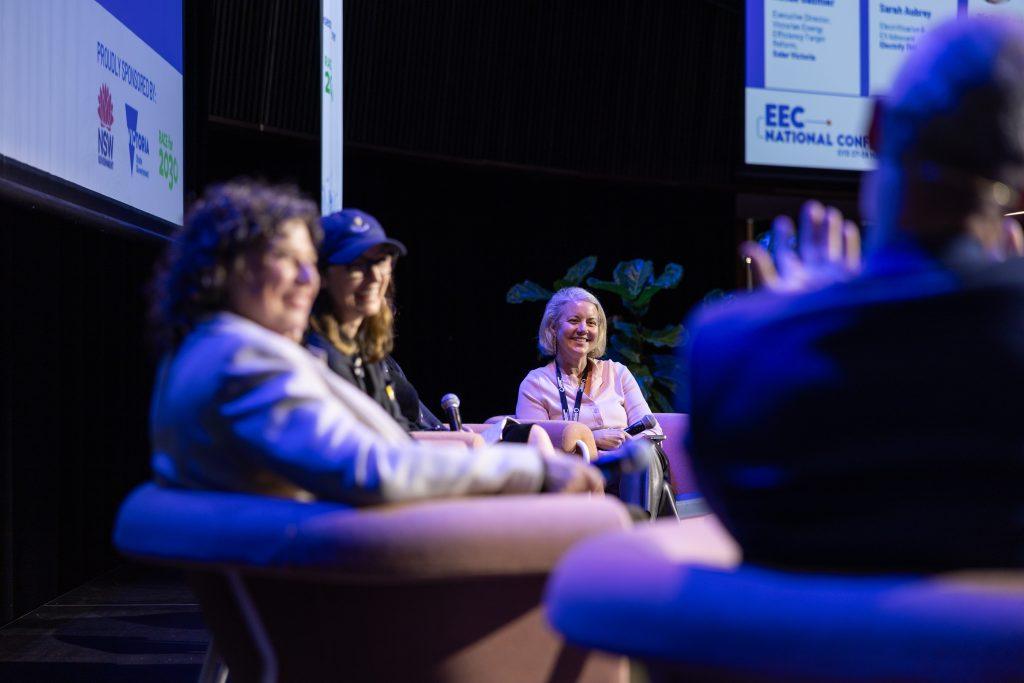
An impressive panel discussed how better storytelling can unlock progress on electrification. Speakers highlighted that while technical solutions and policy frameworks are advancing, success increasingly depends on cutting through a crowded information landscape with simple, human-centred messages. Building trust through authentic voices, real-world stories, and credible messengers was seen as critical to counter misinformation and move people from passive concern to action. The panel underscored that effective communication must be strategic, well-funded, and grounded in an understanding of consumer motivations, ensuring the transition resonates with everyday experiences rather than just industry language.
Renae Gasmier, Solar Victoria
Sarah Aubrey, Electrify This
Ria Voorhaar, Global Strategic Communication Council
Charis Palmer, The Energy
Luke Menzel, EEC